
Emergency Overview
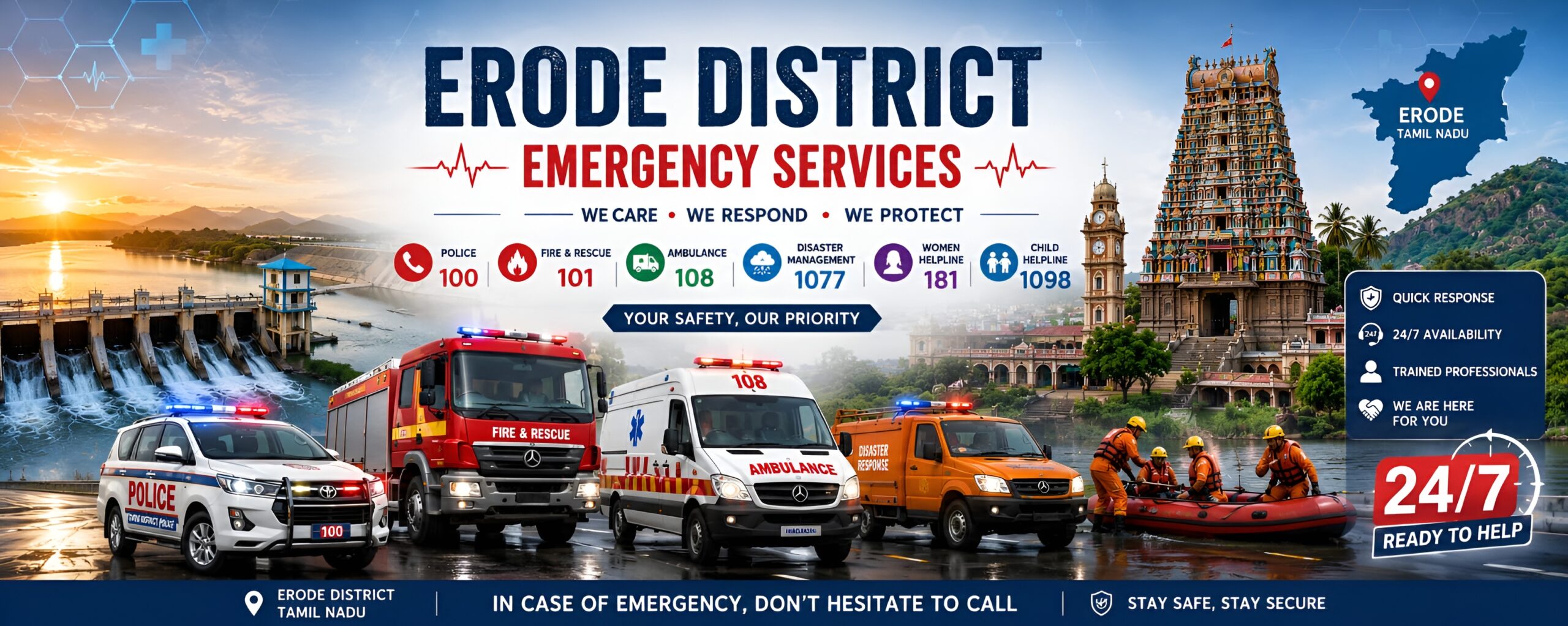
Erode District has a well-coordinated emergency response system designed to provide timely assistance during medical emergencies, road accidents, fire incidents, natural disasters, industrial emergencies, and other critical situations. The district is supported by government hospitals, 108 ambulance services, police stations, fire and rescue departments, disaster management authorities, and other emergency response agencies that work together to ensure the safety and well-being of residents and visitors. Emergency services are available 24×7, with trained personnel, modern medical facilities, advanced equipment, and rapid response teams ready to handle urgent situations efficiently. Well-equipped government hospitals provide emergency treatment, trauma care, diagnostic services, and specialist medical support, while ambulance services ensure quick transportation of patients to the nearest healthcare facility. Through efficient coordination, accessible emergency helplines, public awareness initiatives, and a strong emergency response infrastructure, Erode District remains committed to delivering prompt assistance, minimizing risks, and protecting lives and property during emergencies, ensuring a safe and resilient environment for the entire community.
Emergency Helpline Numbers
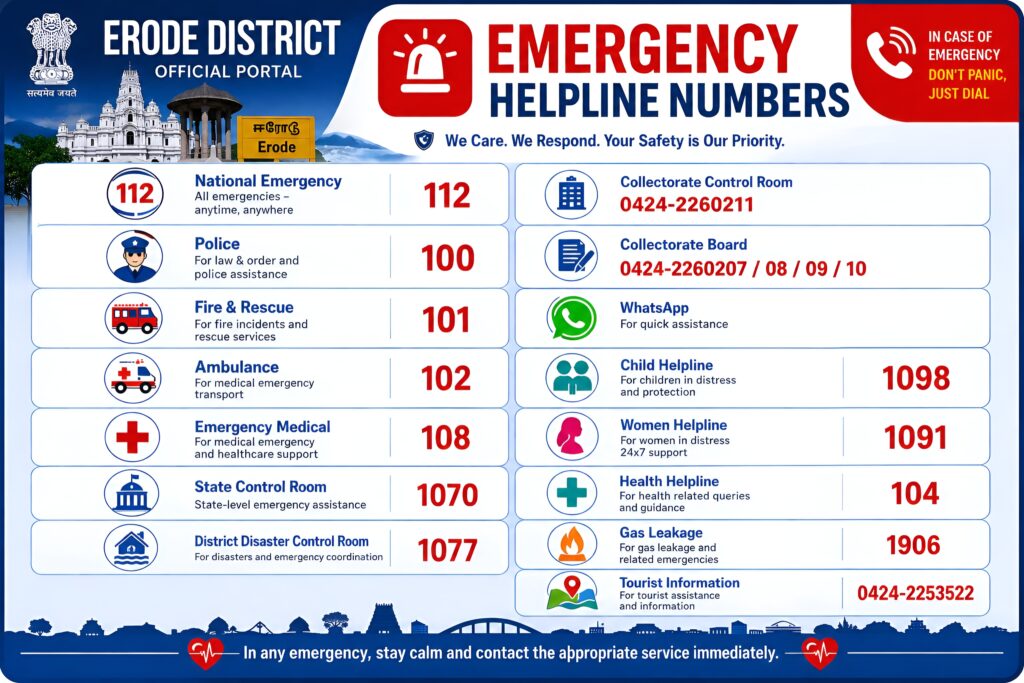
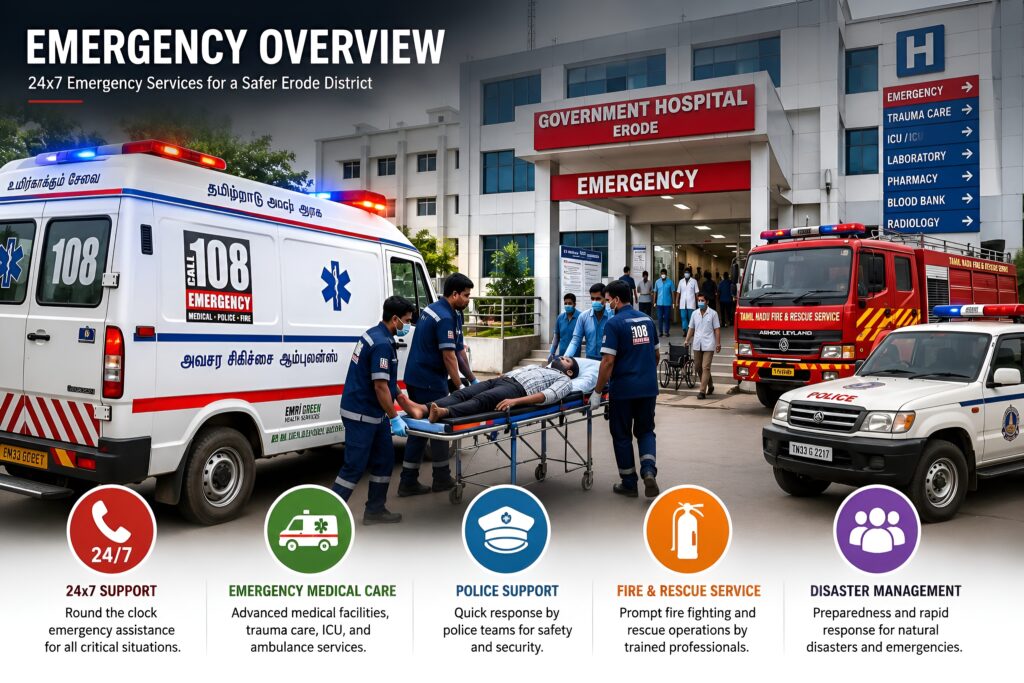
Emergency Helpline Numbers play a vital role in providing immediate assistance during accidents, medical emergencies, fire incidents, natural disasters, crime, road emergencies, and other life-threatening situations. Every citizen should be familiar with these important emergency contact numbers and keep them easily accessible at home, workplaces, schools, and on mobile phones. During an emergency, remain calm, clearly explain the nature of the incident, provide the exact location, and follow the instructions given by the emergency response team. Avoid making false or unnecessary emergency calls, as they can delay assistance to people who genuinely need help. Quick reporting and accurate information enable police, fire services, ambulance teams, disaster management authorities, and other emergency responders to reach the affected location without delay. Families should also educate children and elderly members about the purpose of emergency helpline numbers and how to use them responsibly in critical situations. By knowing the correct emergency helpline numbers and using them wisely, the people of Erode District can help save lives, reduce the impact of emergencies, and contribute to building a safer, more prepared, and resilient community.
Road Safety Guidelines
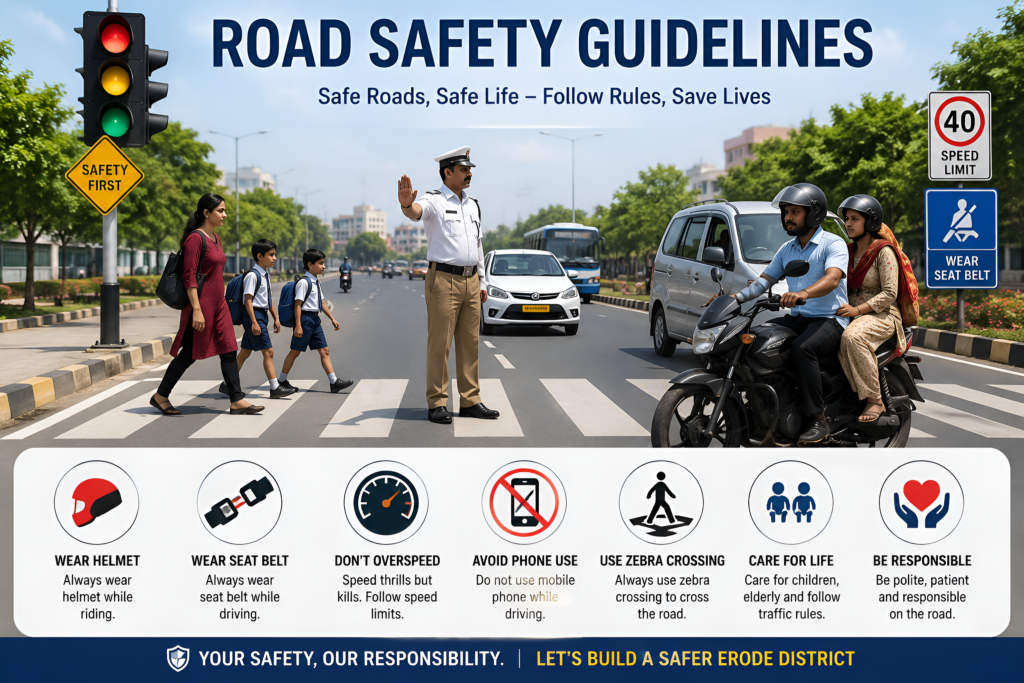
Road safety is essential for protecting lives and preventing accidents on our roads. Every driver, rider, cyclist, and pedestrian has a responsibility to follow traffic rules, obey speed limits, and respect traffic signals to ensure safe travel for everyone. Wearing a helmet while riding a two-wheeler and fastening a seat belt while travelling in a car can greatly reduce the risk of serious injuries during accidents. Drivers should avoid using mobile phones, driving under the influence of alcohol, overspeeding, or engaging in any activity that causes distraction. Maintaining a safe distance from other vehicles, using indicators before turning or changing lanes, and giving priority to pedestrians and emergency vehicles are important road safety practices. Regular maintenance of vehicles, including checking brakes, tyres, and lights, also helps prevent unexpected breakdowns and accidents. Pedestrians should always use designated crossings and remain alert while walking near busy roads. Parents and schools should educate children about road safety awareness and encourage safe travel habits from an early age. By following traffic regulations, driving responsibly, and staying alert at all times, every citizen can contribute to reducing road accidents and creating safer roads for everyone in Erode District.
Fire Safety Guidelines
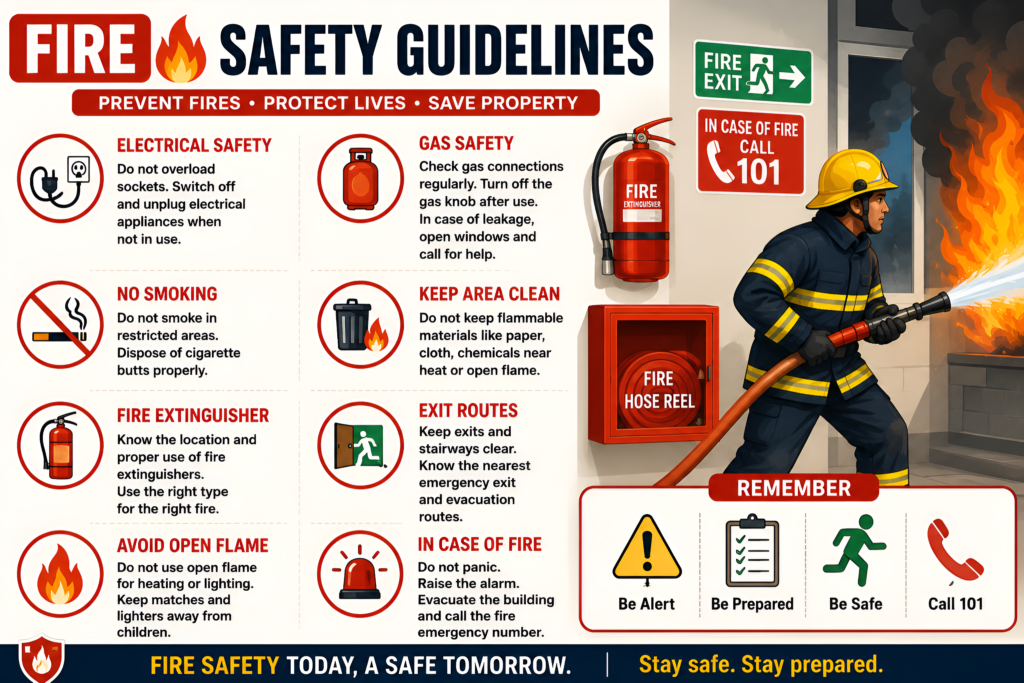
Fire Safety is essential for protecting lives, property, and the environment from the devastating effects of fire accidents. Every individual should be aware of basic fire prevention measures and follow safety guidelines at home, workplaces, schools, and public places. Electrical wiring and appliances should be inspected regularly to prevent short circuits, and flammable materials should be stored safely away from heat sources. Never leave cooking unattended, and ensure that gas cylinders, electrical equipment, and fire extinguishers are properly maintained. In the event of a fire, remain calm, raise the alarm immediately, switch off electricity and gas supplies if it is safe to do so, and evacuate the building using the nearest emergency exit without using elevators. Keep emergency exits clear at all times and follow the instructions of emergency responders. Children should be taught basic fire safety practices, emergency exit routes, and how to contact emergency services in case of a fire. Regular fire safety drills, awareness programs, and proper use of firefighting equipment can help minimize risks and save lives. By practicing fire safety measures and staying prepared for emergencies, everyone can contribute to creating a safer and more secure environment for the people of Erode District.
Flood Safety Guidelines
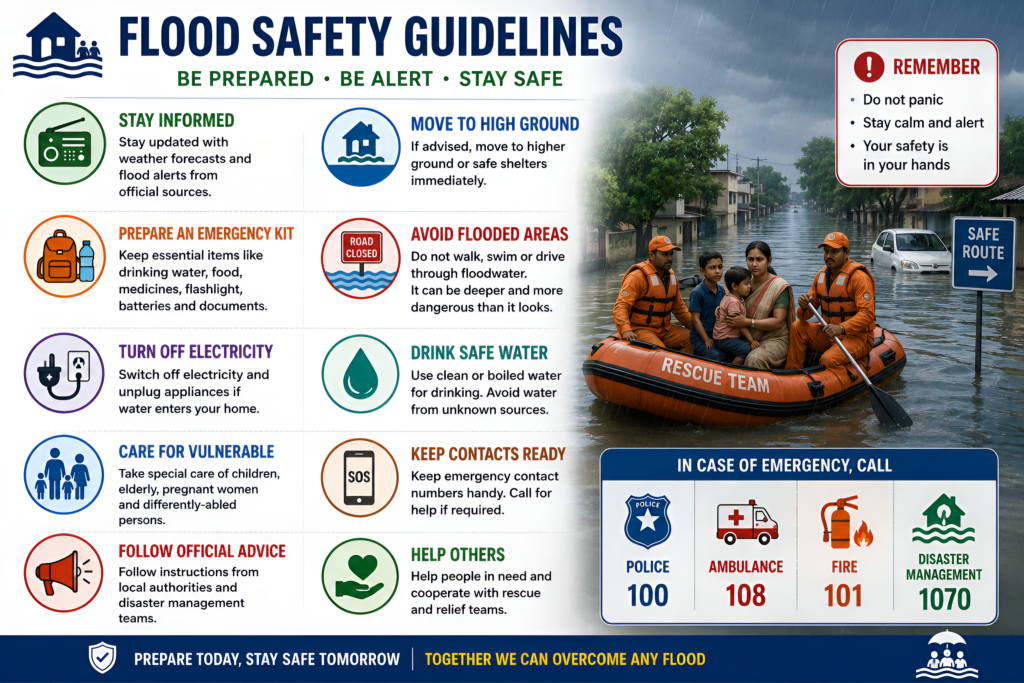
Flood Safety is essential to protect lives and reduce the impact of heavy rainfall and flooding. Stay informed by following weather forecasts and official alerts issued by local authorities. Avoid walking or driving through flooded roads, as even shallow water can be dangerous and may hide open drains or damaged roads. Move to higher ground immediately if floodwaters begin to rise, and keep an emergency kit with drinking water, food, medicines, flashlights, important documents, and mobile chargers ready. Switch off electricity and gas connections if there is a risk of water entering your home, and never touch electrical equipment while standing in water. Keep children and elderly family members away from floodwaters, and avoid entering rivers, canals, or overflowing streams. Ensure that emergency contact numbers are easily accessible and cooperate with rescue teams and local authorities during evacuation or relief operations. After the flood recedes, return home only when authorities declare it safe, avoid contaminated water, and maintain proper hygiene to prevent waterborne diseases. By staying alert, following official instructions, and taking timely precautions, everyone can help ensure the safety of their families and communities during flood emergencies in Erode District.
Children Safety Guidelines
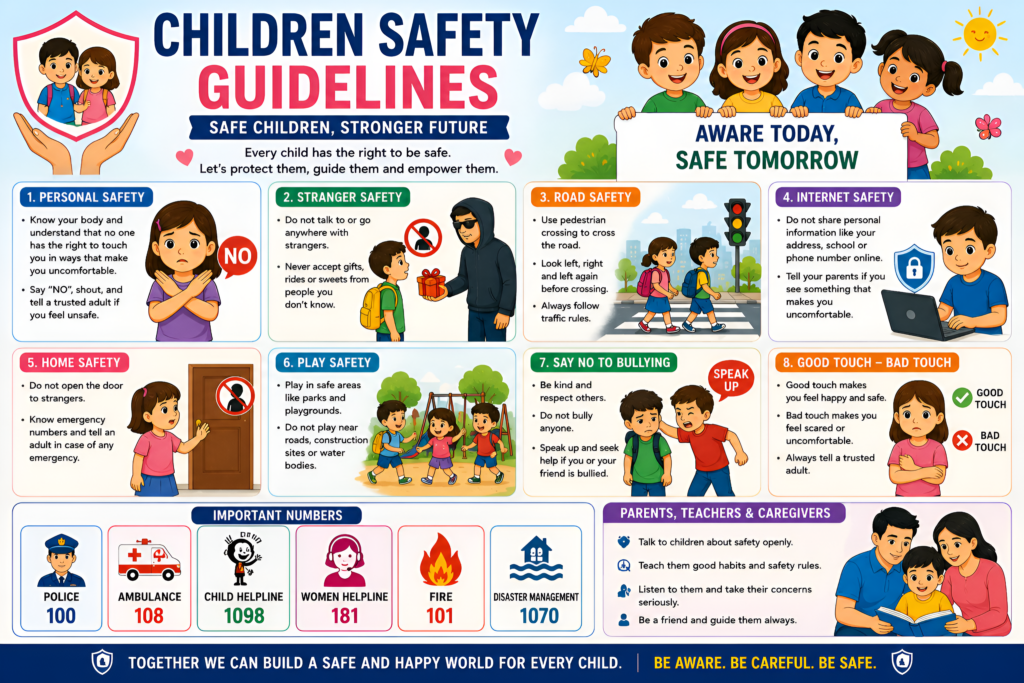
Children Safety is essential for ensuring the healthy growth, well-being, and protection of every child. Parents, teachers, and caregivers should always supervise children and educate them about personal safety, road safety, fire safety, and emergency preparedness. Children should be encouraged to avoid talking to strangers, never accept gifts or rides from unknown persons, and immediately report any unsafe situation to a trusted adult. They should always wear helmets while cycling, use seat belts when travelling in vehicles, and follow traffic rules while crossing roads. Homes, schools, and playgrounds should be kept safe by removing potential hazards and providing a secure environment for learning and play. Teaching children emergency contact numbers and basic first aid awareness can help them respond calmly during emergencies. Children should also be encouraged to stay alert in public places, avoid unsafe areas, and seek immediate help from police, teachers, or trusted adults whenever they feel threatened or lost. By promoting safety awareness, responsible supervision, and a caring environment, we can protect children and ensure they grow up safely and confidently in Erode District.
Summer heat Safety Guidelines
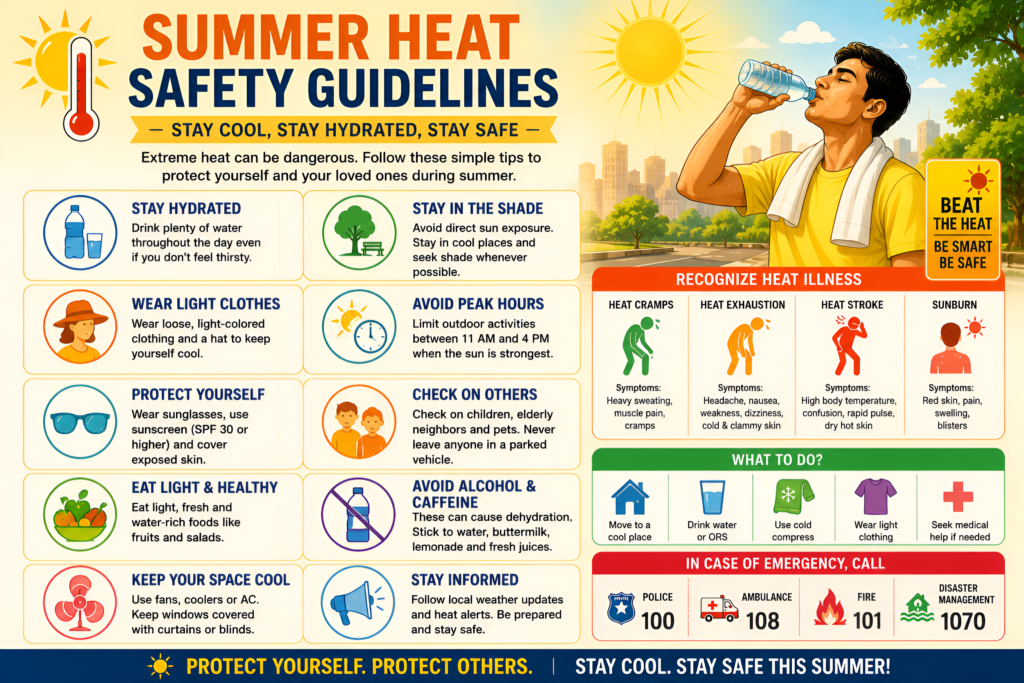
Summer Heat Safety is essential to protect yourself and your family from extreme temperatures and heat-related illnesses. During hot weather, drink plenty of clean water throughout the day to stay hydrated, even if you do not feel thirsty. Avoid going outdoors during peak afternoon hours, especially between 11:00 AM and 3:00 PM, when temperatures are at their highest. Wear light-coloured, loose-fitting cotton clothing, use hats, umbrellas, or sunglasses, and apply sunscreen to protect your skin from harmful UV rays. Never leave children, elderly persons, or pets inside parked vehicles, as temperatures can rise rapidly and become life-threatening. Eat fresh fruits and light, nutritious meals, and avoid excessive caffeine, alcohol, and oily foods that can increase dehydration. If you experience symptoms such as dizziness, excessive sweating, headache, nausea, or fainting, move to a cool place immediately, drink water or oral rehydration solution (ORS), and seek medical attention if necessary. Special care should be taken for children, elderly people, outdoor workers, and individuals with existing health conditions, as they are more vulnerable to heat-related illnesses. By staying hydrated, avoiding prolonged sun exposure, and following simple heat safety precautions, everyone can stay safe and healthy during the summer season in Erode District.
Women Safety Guidelines
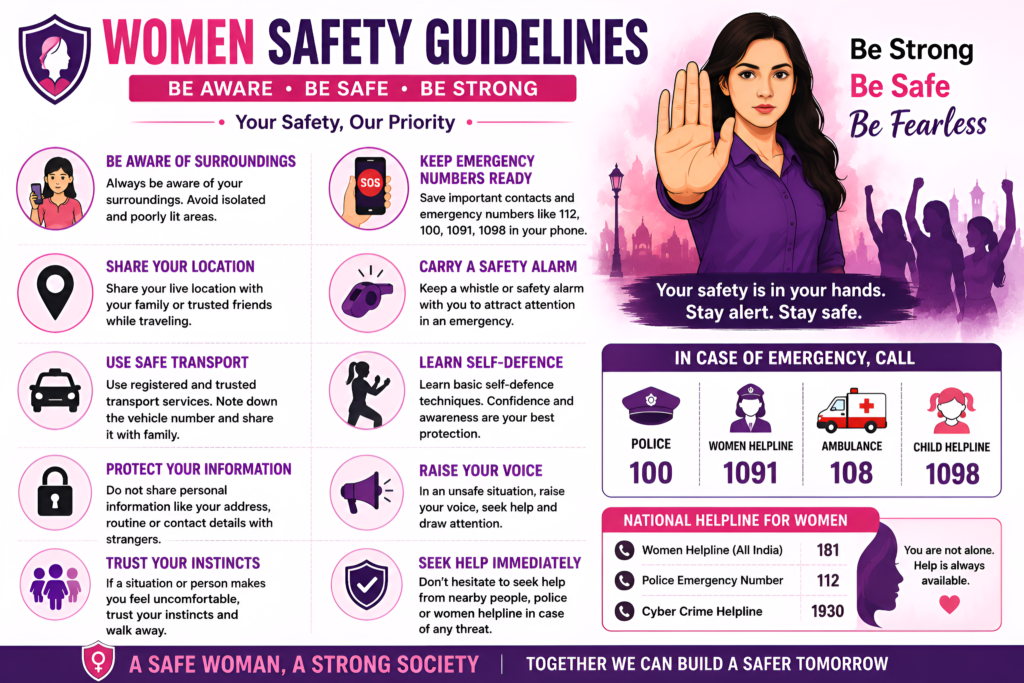
Women Safety is essential for building a secure, respectful, and inclusive community where every woman can live, work, and travel with confidence. Women should remain aware of their surroundings, especially while travelling alone or during late hours, and share their travel details with trusted family members or friends whenever possible. Use well-lit and populated routes, avoid isolated areas, and make use of trusted public transport or verified ride services. Keep emergency contact numbers readily available and carry a fully charged mobile phone at all times. In case of any threat, harassment, or emergency, immediately contact the Women Helpline (181) or the Emergency Helpline (112) and seek assistance from nearby police or responsible authorities. Parents, educational institutions, workplaces, and communities should promote awareness, mutual respect, and equal opportunities while creating a safe environment free from harassment and violence. Self-defence training, digital safety awareness, and responsible use of social media can further enhance personal security. By staying alert, reporting suspicious activities, supporting one another, and following basic safety precautions, we can create a safer and more empowering environment for all women in Erode District.
Weather Reports
Loading Date & Time...
Disaster Management – Erode District
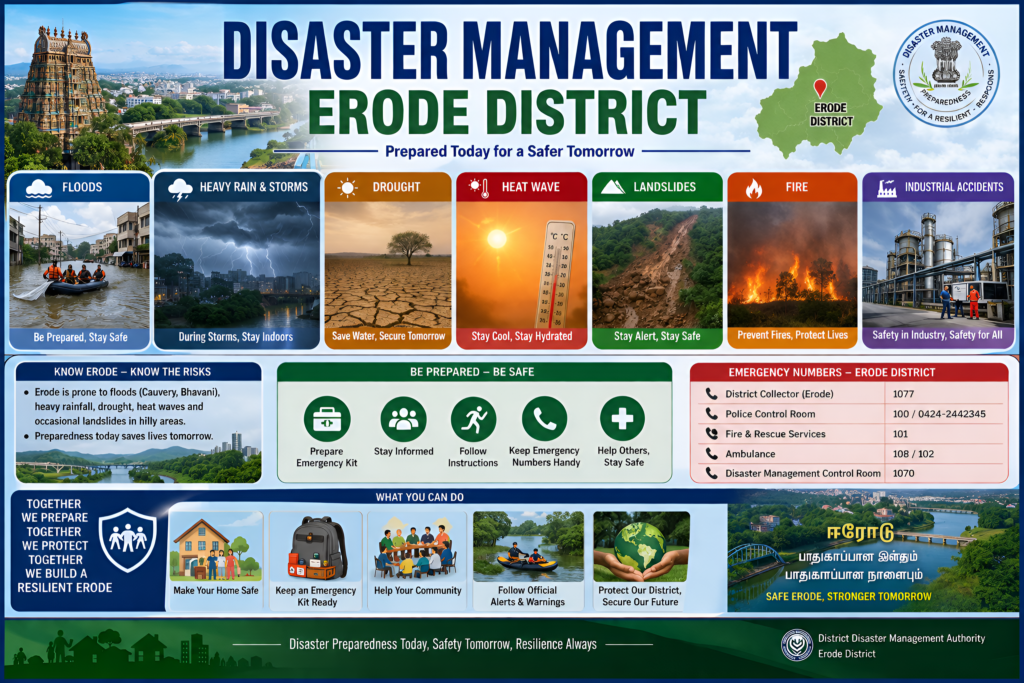
Erode District is committed to strengthening disaster preparedness, response, and recovery to protect the lives, livelihoods, and property of its people. Due to its geographical location, the district may experience floods, heavy rainfall, cyclones, droughts, heat waves, fire accidents, industrial hazards, and occasional landslides in hilly regions. The District Disaster Management Authority (DDMA), along with government departments, emergency services, local bodies, and community volunteers, works together to reduce disaster risks through early warning systems, public awareness programs, emergency response planning, rescue operations, and rehabilitation measures. Citizens are encouraged to stay informed through official weather alerts, prepare emergency kits with essential supplies, safeguard important documents, follow evacuation instructions, avoid risky areas during disasters, and keep emergency contact numbers readily available. Community participation, regular safety drills, responsible environmental practices, and timely reporting of emergencies play a vital role in building a resilient district. By working together and promoting disaster awareness, Erode District aims to ensure public safety, minimize the impact of disasters, and create a safer, stronger, and more disaster-resilient future for everyone.