
Erode District Overview
Welcome to Erode District
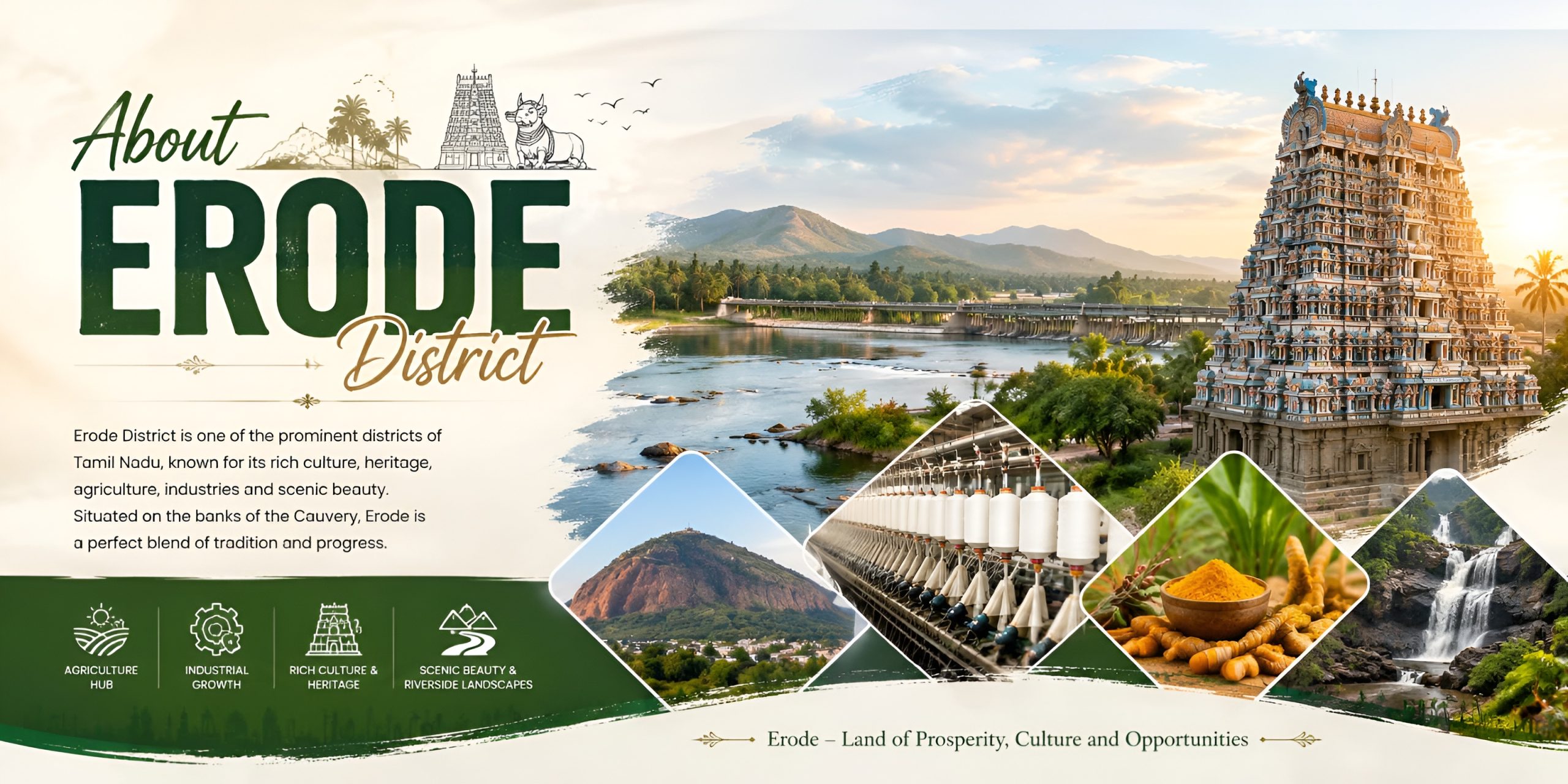
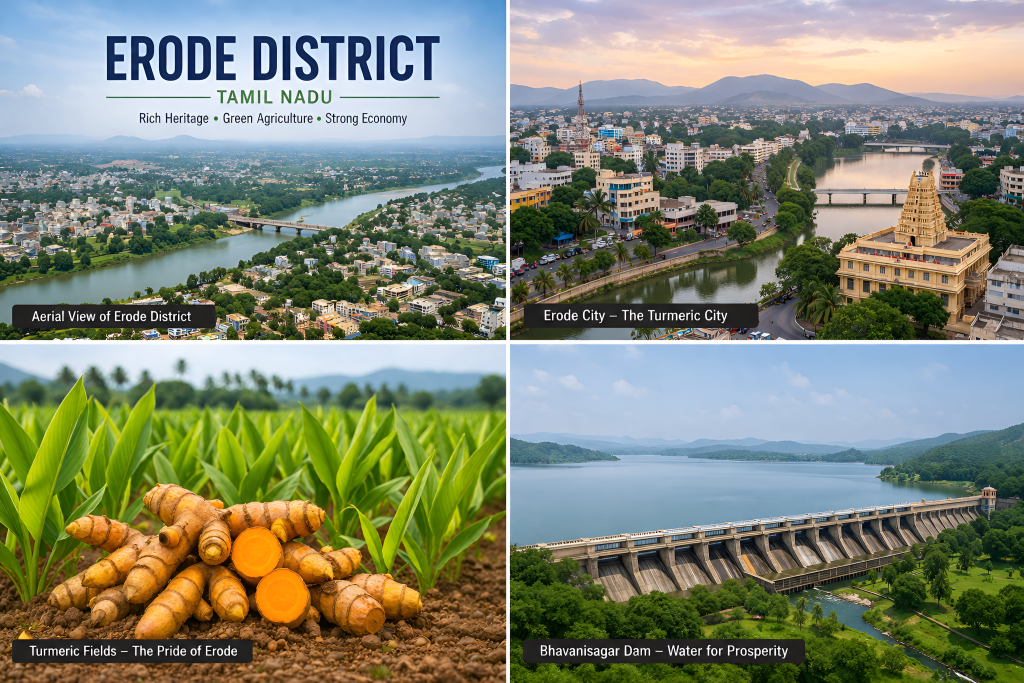
Erode District is one of the most vibrant and historically significant districts in the state of Tamil Nadu, known for its rich cultural heritage, thriving textile industry, fertile agricultural landscape, and remarkable economic growth. Strategically located in the western region of the state, the district serves as an important commercial, industrial, and transportation hub, connecting major cities through an extensive network of roads, railways, and nearby air connectivity. Often referred to as the “Turmeric Capital of India” due to its renowned turmeric production and trade, Erode also plays a vital role in textile manufacturing, handloom weaving, dairy farming, and agricultural development. The district is blessed with natural resources, scenic rivers such as the Cauvery and Bhavani, picturesque landscapes, historic temples, wildlife reserves, and vibrant local traditions that reflect the essence of Tamil culture. Alongside its economic achievements, Erode continues to focus on quality education, healthcare, digital governance, sustainable development, and citizen-centric public services, ensuring a high standard of living for its residents. With its unique blend of historical significance, cultural diversity, industrial excellence, and modern infrastructure, Erode District stands as a progressive destination that warmly welcomes visitors, investors, and citizens while preserving its rich legacy for future generations.
Ancient and Early History
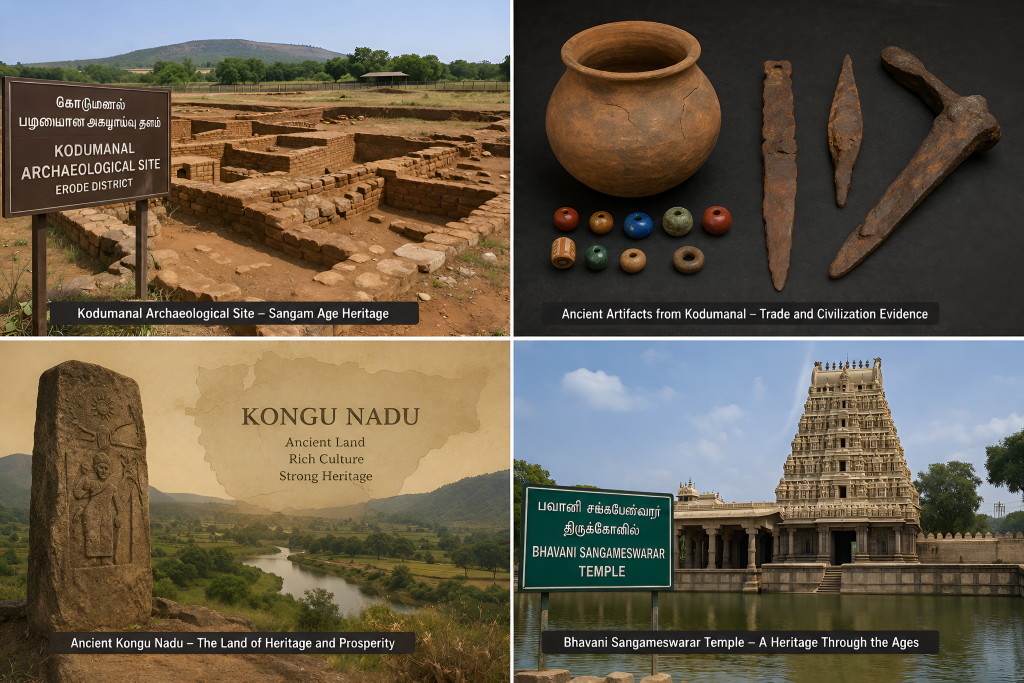
Erode District has a rich and vibrant history that dates back to the Sangam Age (300 BCE–300 CE), when it formed an important part of the ancient Kongu Nadu region. The district was renowned for its fertile lands, thriving agriculture, and strategic trade routes that connected various parts of South India. Over the centuries, Erode came under the rule of the powerful Chera, Chola, and Pandya dynasties, each contributing significantly to its political, cultural, and economic development. The fertile plains nourished by the Cauvery and Bhavani rivers supported early settlements and prosperous farming communities, while the region became well known for the trade of agricultural produce, handloom textiles, and turmeric. Numerous ancient temples, stone inscriptions, hero stones, and archaeological discoveries found across the district provide valuable evidence of its rich historical and cultural heritage. During the medieval period, Erode was ruled by the Vijayanagara Empire and later by the Madurai Nayaks, followed by the administration of Hyder Ali and Tipu Sultan of Mysore. In the late 18th century, the region came under British rule, leading to further administrative and infrastructural development. These successive dynasties and historical events have shaped Erode into a district with a unique cultural identity and a proud historical legacy.
Major Towns and Population Details
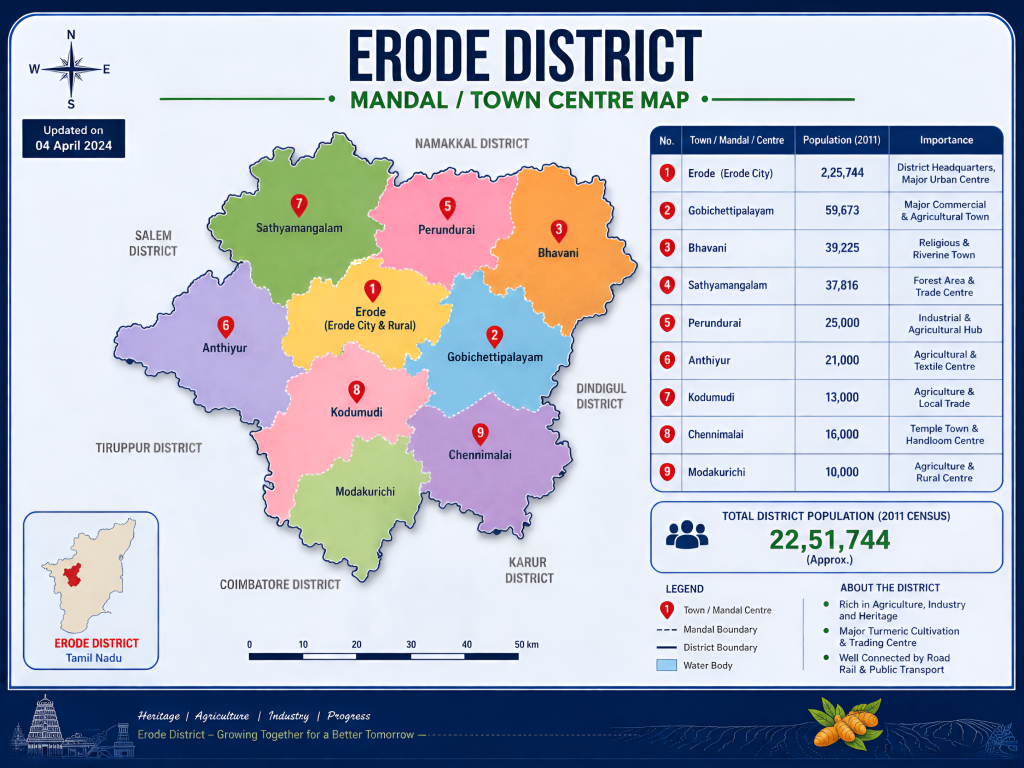
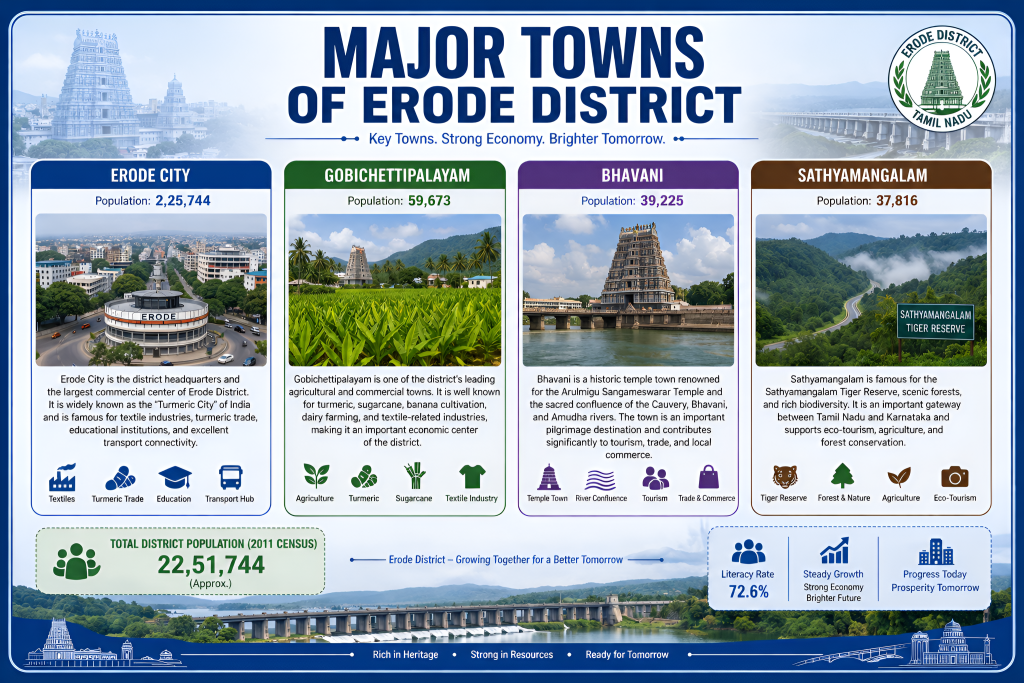
Erode District is home to several important towns that contribute significantly to its economic, industrial, agricultural, and cultural development. Major urban centers include Erode, Gobichettipalayam, Bhavani, Perundurai, Sathyamangalam, Kodumudi, Chennimalai, Anthiyur, Modakurichi, and Bhavanisagar, each playing a unique role in the district’s progress. Erode City, the district headquarters, is the largest urban center and is widely known for its thriving textile industries, turmeric trade, commercial activities, and educational institutions. Gobichettipalayam is recognized for agriculture and textile production, Bhavani for its historic temples and river confluence, Sathyamangalam for its forests and wildlife, and Perundurai and Chennimalai for their industrial and handloom sectors. According to the 2011 Census of India, Erode District has a total population of 2,251,744 (approximately 2.25 million) with a balanced rural and urban population. The district has a literacy rate of around 72.6% and continues to witness steady population growth driven by industrial expansion, quality educational institutions, healthcare facilities, and improved infrastructure. With excellent road and rail connectivity, a strong agricultural base, flourishing industries, and rapidly developing urban centers, Erode remains one of Tamil Nadu’s most vibrant and economically significant districts, contributing greatly to the state’s overall economic, social, and cultural development.
Quick Facts In Erode District
Area
5,760 km²
Population
2.25 Million (Approx.)
Languages
Tamil (Primary), English
Known For
Turmeric, Textiles, Handloom Industry & Agriculture
Important Towns
ERODE CITY-Population: 2,25,744
Erode City is the district headquarters and the largest commercial center, famous for its textile industries, turmeric trade, educational institutions, and excellent transport connectivity.
GOBICHETTIPALAYAM-Population: 59,673
Gobichettipalayam is a leading agricultural and commercial town, well known for turmeric, sugarcane, banana cultivation, dairy farming, and textile industries.
BHAVANI-Population: 39,225
Bhavani is a historic temple town renowned for the Sangameswarar Temple and the sacred confluence of the Cauvery, Bhavani, and Amudha rivers, making it an important pilgrimage and tourism destination.
SATHYAMANGALAM-Population: 37,816
Sathyamangalam is famous for the Sathyamangalam Tiger Reserve, scenic forests, rich biodiversity, eco-tourism, and its strategic location connecting Tamil Nadu and Karnataka.
Economy of Erode District
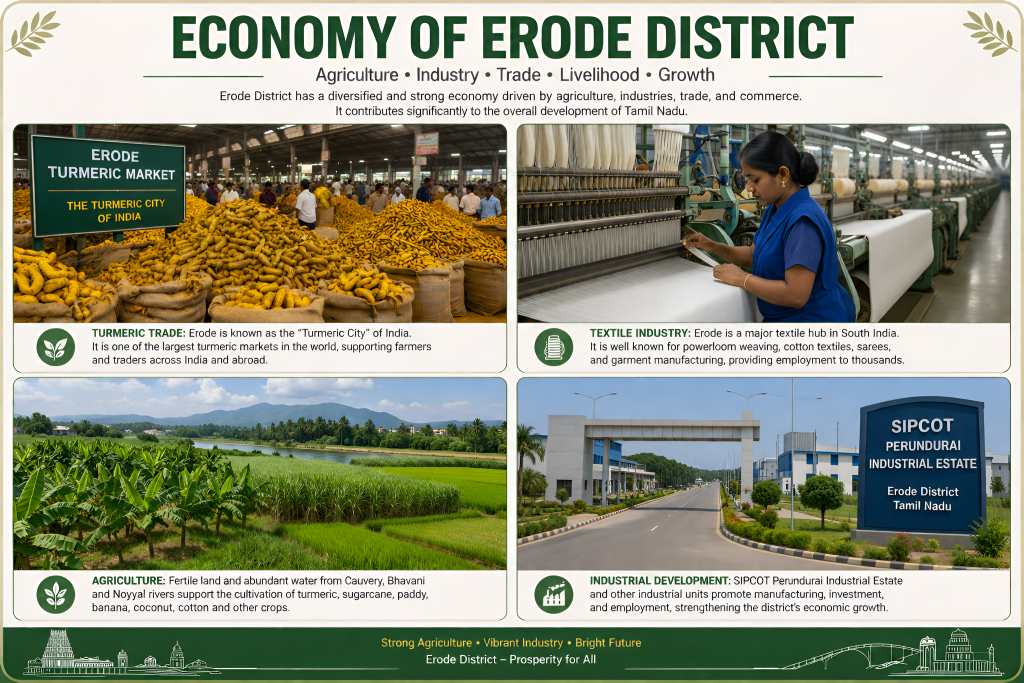
Erode District has one of the strongest and most diversified economies in Tamil Nadu, driven by agriculture, textiles, trade, dairy farming, and manufacturing. The district is widely known as the “Turmeric City” of India and is home to one of the country’s largest turmeric markets, making turmeric cultivation and trade a major contributor to the local economy. Fertile lands irrigated by the Cauvery, Bhavani, and Noyyal rivers support the cultivation of turmeric, paddy, sugarcane, banana, coconut, cotton, and other crops. Erode is also a leading center for handloom and powerloom weaving, textile processing, garment manufacturing, paper production, and leather-related industries. Dairy farming and livestock activities further strengthen the rural economy, while wholesale markets and small- and medium-scale industries generate employment and support business growth. With excellent road and rail connectivity, a skilled workforce, expanding industrial infrastructure, and a thriving commercial sector, Erode continues to play a significant role in the economic development of Tamil Nadu and contributes substantially to the state’s industrial and agricultural growth.
Geography and Natural Features
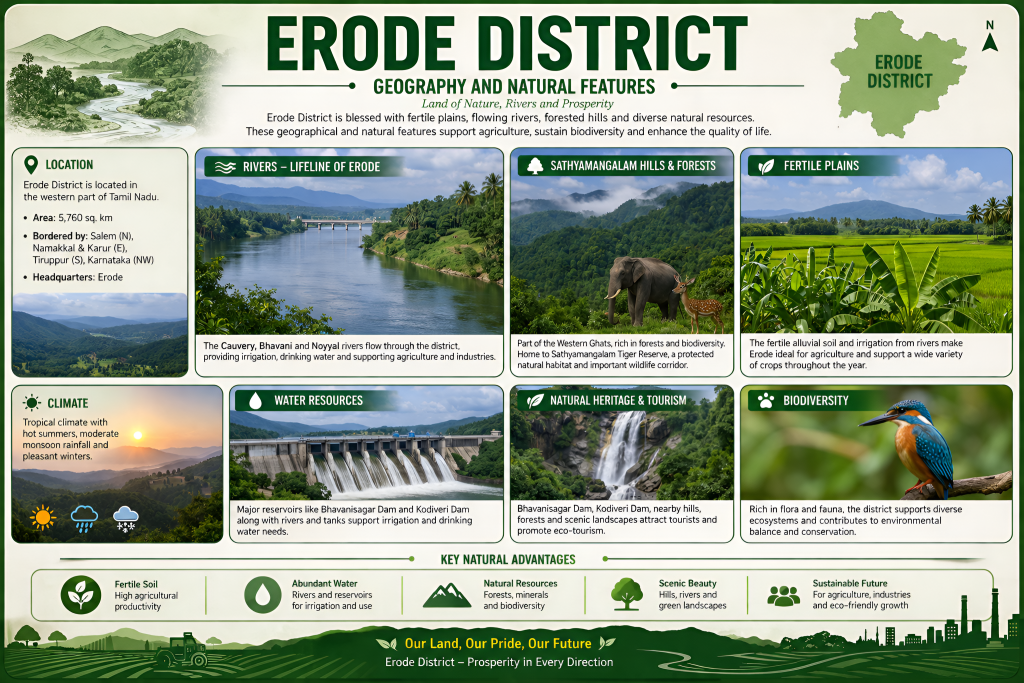
Erode District is located in the western part of Tamil Nadu and covers an area of approximately 5,760 square kilometers. The district is bordered by Namakkal and Karur districts to the east, Tiruppur district to the south, Salem district to the north, and the state of Karnataka to the northwest. The district is blessed with fertile plains, rolling hills, forests, and an extensive river system that supports agriculture and biodiversity. The Cauvery, Bhavani, and Noyyal rivers are the major rivers flowing through the district, providing water for irrigation, drinking, and industrial use. The Sathyamangalam Hills, part of the Western Ghats, are known for their rich forests, diverse wildlife, and the famous Sathyamangalam Tiger Reserve, one of India’s important wildlife habitats. Erode experiences a tropical climate with warm summers, moderate monsoon rainfall, and pleasant winters, making it suitable for agriculture throughout the year. The district’s fertile soil, abundant water resources, scenic landscapes, and natural attractions such as Bhavanisagar Dam, Kodiveri Dam, and forest reserves contribute significantly to its agricultural productivity, eco-tourism, and environmental sustainability.
Climate and Natural Features of Erode District
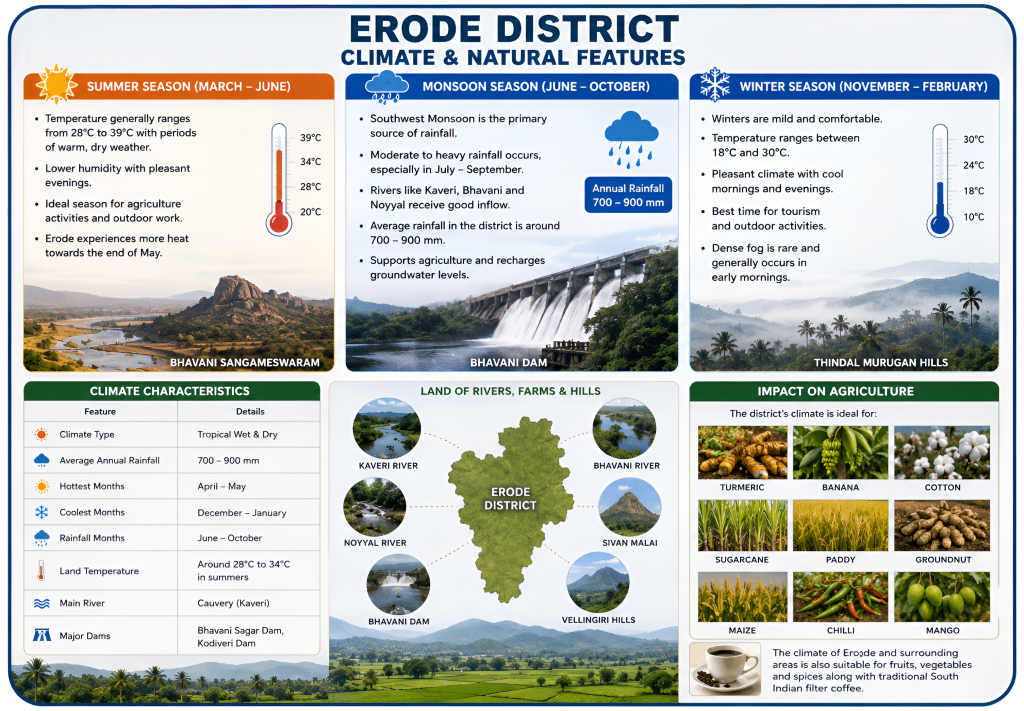
Erode District has a tropical climate with hot summers, moderate rainfall, and pleasant winters. The district experiences different seasons throughout the year, with summer generally lasting from March to June, followed by the monsoon seasons and cooler winter months from November to February. Erode receives rainfall mainly from the Southwest Monsoon and Northeast Monsoon, which helps maintain water resources and supports agricultural activities. The district is blessed with diverse natural features such as fertile plains, rivers, hills, forests, and vast agricultural lands. The Cauvery River and its tributaries are important sources of irrigation, contributing greatly to the growth of agriculture in the region. The fertile soil and favorable climate conditions support the cultivation of major crops like turmeric, sugarcane, paddy, coconut, banana, and other commercial crops. The Western Ghats and forest regions add to the district’s natural beauty and biodiversity by providing a suitable habitat for various plants and wildlife species. The hills, valleys, and greenery also promote tourism and environmental conservation. The combination of favorable climate, rich natural resources, fertile lands, and diverse landscapes makes Erode District an important agricultural, ecological, and economically significant region of Tamil Nadu.